
On October 28, the 2026 China Society of Automotive Engineers (SAE-China) Science and Technology Awards ceremony was held in Suzhou, Jiangsu. Led by GAC Group, a consortium of 10 organizations, including the Institute of Materials Science and Technology, Dongguan, Chinese…
This article is reposted by Juncai Magnetic Application, with copyrights belonging to the original author; the original link is available in the "Sources" section at the end of the text.
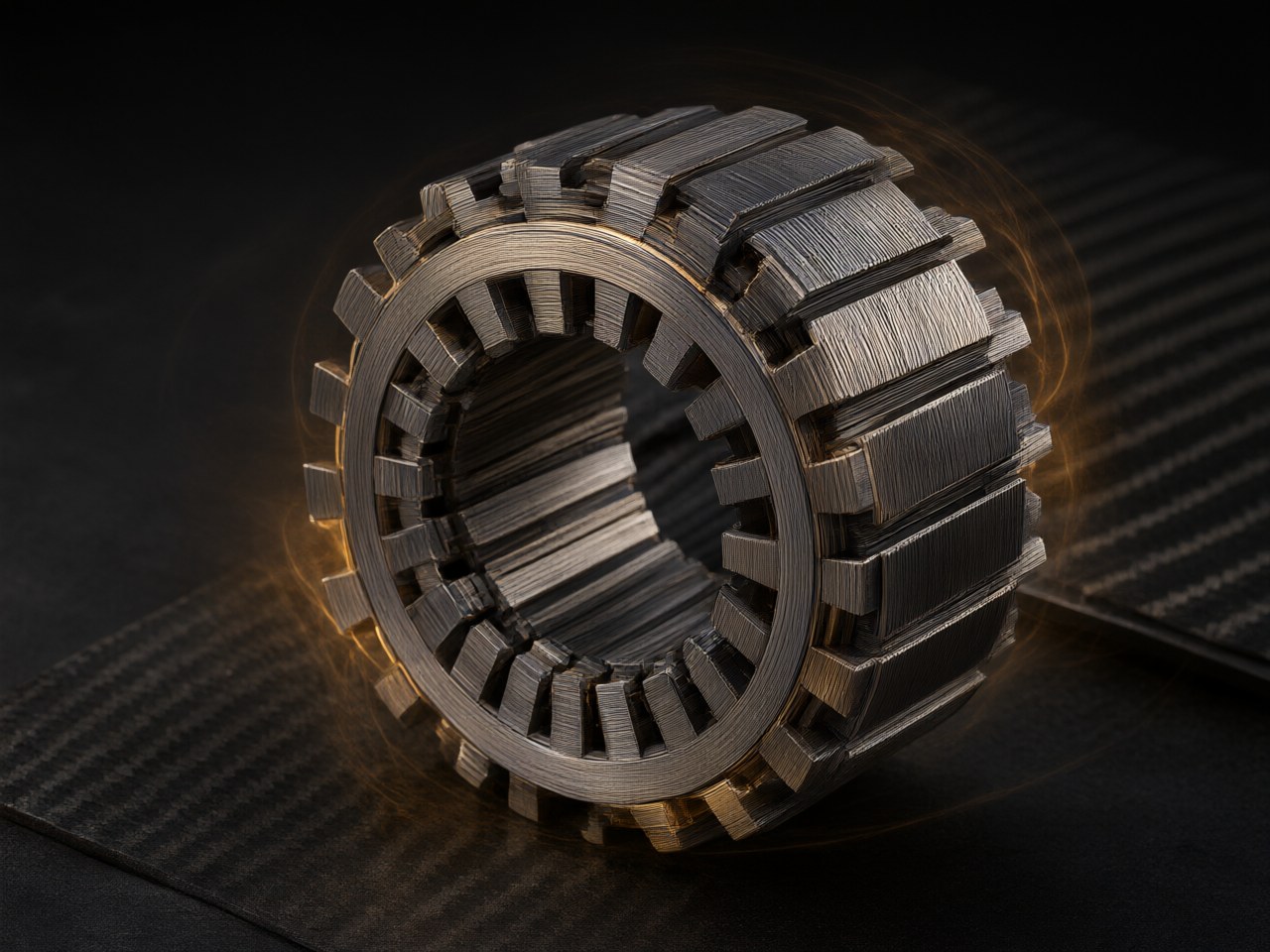
On October 28, the 2026 China Society of Automotive Engineers (SAE-China) Science and Technology Awards ceremony was held in Suzhou, Jiangsu Province. According to the Guangzhou Branch of the Chinese Academy of Sciences, the project titled "Key Technologies and Applications of High-Efficiency and High-Power-Density Amorphous-Carbon Fiber Electric Drive for New Energy Vehicles," jointly completed by 10 organizations including GAC Group, the Institute of Materials Science and Technology, Dongguan, Chinese Academy of Sciences (Songshan Lake Materials Laboratory), Wuhan University of Technology, and Lingwei Innovation Intelligent Systems (Zhejiang) Co., Ltd., was awarded the First Prize of the Science and Technology Progress Award by the China Society of Automotive Engineers. As core members of the project team, Researcher Bai Haiyang and Associate Researcher Zhou Jing from the Amorphous Materials Research Department of the Institute of Materials Science and Technology, Dongguan, focused on the bottleneck of core materials for stator cores. They successfully tackled the key challenges in the "Design of Sequence Control for Iron-Based Amorphous Stator Materials with High Magnetic Induction and Low Iron Loss, and Synergistic Manufacturing Technology for Shape and Properties," laying a critical material foundation for the project's breakthrough.
For a long time, the efficiency and power density of traditional silicon steel motors have approached their physical limits. Although amorphous alloy motors have been explored by the global industry for decades, they have long remained in the laboratory R&D stage due to bottlenecks such as high material brittleness and difficult forming. To bridge the entire industry-academia-research-application chain from basic research, technological breakthroughs, engineering verification, to industrialization, the Institute of Materials Science and Technology, Dongguan (hereinafter referred to as the "Dongguan Institute of Materials"), and GAC Group, among other units, leveraged their respective advantages to conduct collaborative research.
The Dongguan Institute of Materials has conducted systematic mechanism research on amorphous alloys, continuously producing high-level academic achievements. Relying on its profound experience in material composition design and performance regulation, the institute has overcome key challenges in the composition, solidification, and sequence state regulation of amorphous soft magnetic alloys. It has stably produced the ultra-thin, high-performance JSA series amorphous-nanocrystalline transition soft magnetic alloy strips, with a thickness as thin as 0.025 mm, a high saturation magnetic induction of 1.68-1.94 T, and a low coercivity of 0.8-4.3 A/m, effectively reducing high-frequency core losses. On this basis, building upon the GAC team's two core technologies—the world's first mass production process for amorphous stators and the carbon fiber high-speed rotor—an integrated amorphous-carbon fiber Quark electric drive technology system was created, successfully achieving the world's first large-scale mass production of amorphous alloy automotive motors.
The project's electric drive has achieved breakthroughs in multiple key indicators: the motor's peak efficiency reaches 99.03%, and the power density reaches 17.29 kW/kg (@1000 V), which is far superior to the industry's mainstream level. The maximum speed is 30,000 rpm, and the CLTC (China Light-Duty Vehicle Test Cycle) efficiency of the electric drive system reaches 94.184%. The energy consumption of the whole vehicle equipped with this electric drive has decreased by 4%, and the range can be extended by 30-50 kilometers under the condition of unchanged battery capacity. Currently, the achievements have been batch-loaded on GAC Hyper and Aion series models, and are being promoted to multiple automakers in the industry.
This award is a typical practice of the deep integration of technological innovation and industrial innovation. The Dongguan Institute of Materials will continue to address major national needs such as new energy vehicles and computing power equipment, focusing on the iteration, scale-up preparation, and performance optimization of the amorphous soft magnetic material system. It aims to bridge the innovation chain of frontier materials from basic R&D, pilot scale-up, to application landing, providing material support for the independent and controllable development of China's new energy vehicle powertrains and the cultivation of new quality productive forces.
Sources
- Guangzhou Branch of the Chinese Academy of Sciences (2026-10-29)
- Original link: Dongguan Institute of Materials Collaborates with GAC to Win First Prize of SAE-China Science and Technology Progress Award
- http://www.gzb.cas.cn/zhxw/dgcls/202611/t20261102_8301430.html