
Technical Forum
Professional insights and technical analysis from the AIC Engineering team on magnetic materials, magnetic sensors, motor design, and application engineering.
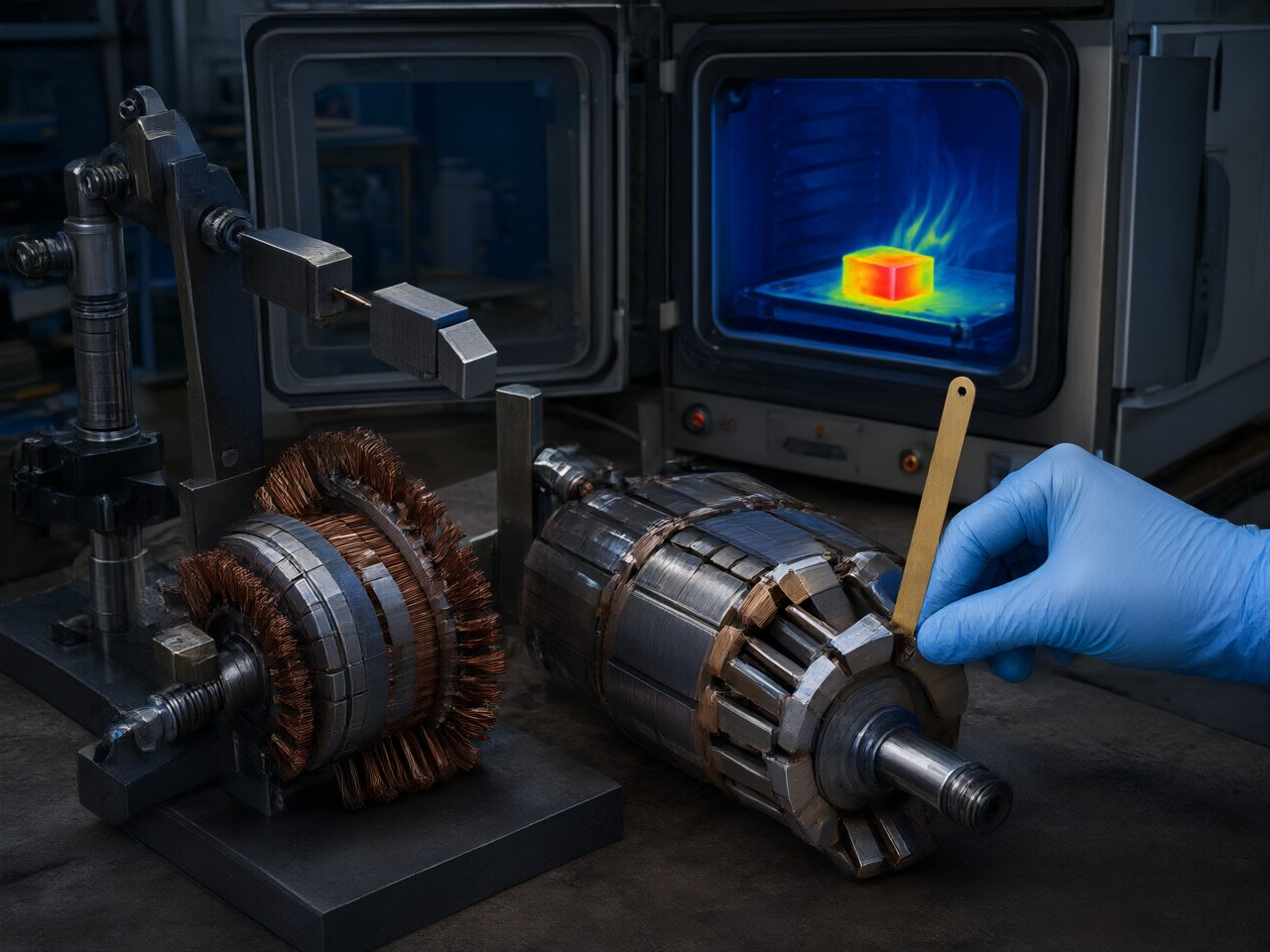
HRE-Free and High-HRE NdFeB Do Not Carry a Universal Motor Lifetime Ratio
Permanent-magnet motor service life is fixed by the worst operating point the magnet actually sees, not by whether the grade is marketed as free of heavy rare earth (HRE) or rich in dysprosium and terbium. HRE-free and high-HRE sintered NdFeB can both survive a duty cycle, and both can fail early, for reasons a composition label does not capture. This note is an application selection guide: what changes when Dy/Tb are left out or reduced, where that change matters, and what has to be measured before a grade is locked for production.
How Should Companies Set Magnet Selection and Inventory Strategy When Rare-Earth Prices Are Volatile?
How engineering and procurement should split the magnet decision between a physics-based specification and a sourcing policy when rare-earth input costs are unstable.
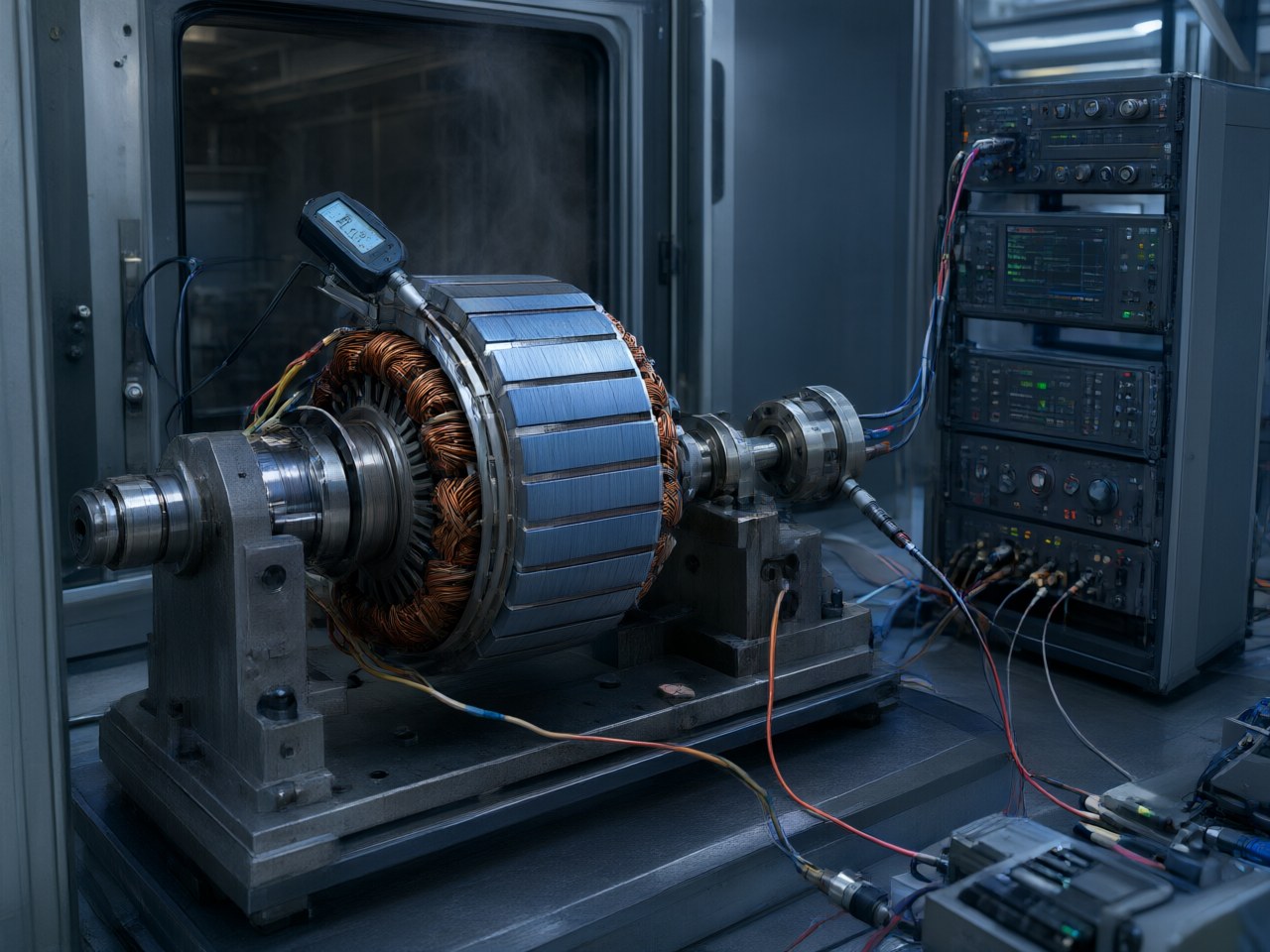
How Much Do Magnet Temperature Coefficients Actually Affect Motor Efficiency and Torque Ripple?
A motor's torque and efficiency at 120 °C rarely match the numbers measured on the bench at 25 °C. Winding resistance, the drive, and the lamination stack all move with temperature as well. A large and often under-accounted part of the torque-constant change is the permanent magnet: remanence and intrinsic coercivity shift with temperature, and they do not shift at the same rate. When a design team has to choose between an NdFeB grade that looks strong at room temperature and a heavy-rare-earth NdFeB or SmCo grade that costs more, the decision hinges on two coefficients — α B r , the reversible temperature coefficient of remanence, and β H c j , the reversible temperature coefficient of intrinsic coercivity — and on whether the hot operating point is still above the knee. This article is a selection comparison for that decision, not a material catalog and not a report of a particular tested machine.
How Different NdFeB Magnet Grades (N, M, H, SH, UH, EH, AH) Match Different Operating Conditions
NdFeB marks are not a ladder of “strength.” On a full designation such as N42SH, the leading N names the sintered neodymium-iron-boron family, the number is a nominal maximum energy product in MGOe, and the suffix is a minimum intrinsic-coercivity class. In the shorthand used in the title, N, M, H, SH, UH, EH, and AH are those coercivity classes: N means the base class with no temperature suffix, not a separate energy-product family. Most commercial sintered grades used in motors, actuators, and sensors have remanence roughly in the 1.15–1.45 T band. At a fixed energy-product number, a suffix step changes Hcj much more than it changes Br or BHmax. What separates the classes in hardware is resistance to irreversible flux loss under temperature and demagnetizing field. Selection is a temperature and demagnetization-margin problem, not a search for the highest room-temperature BHmax.
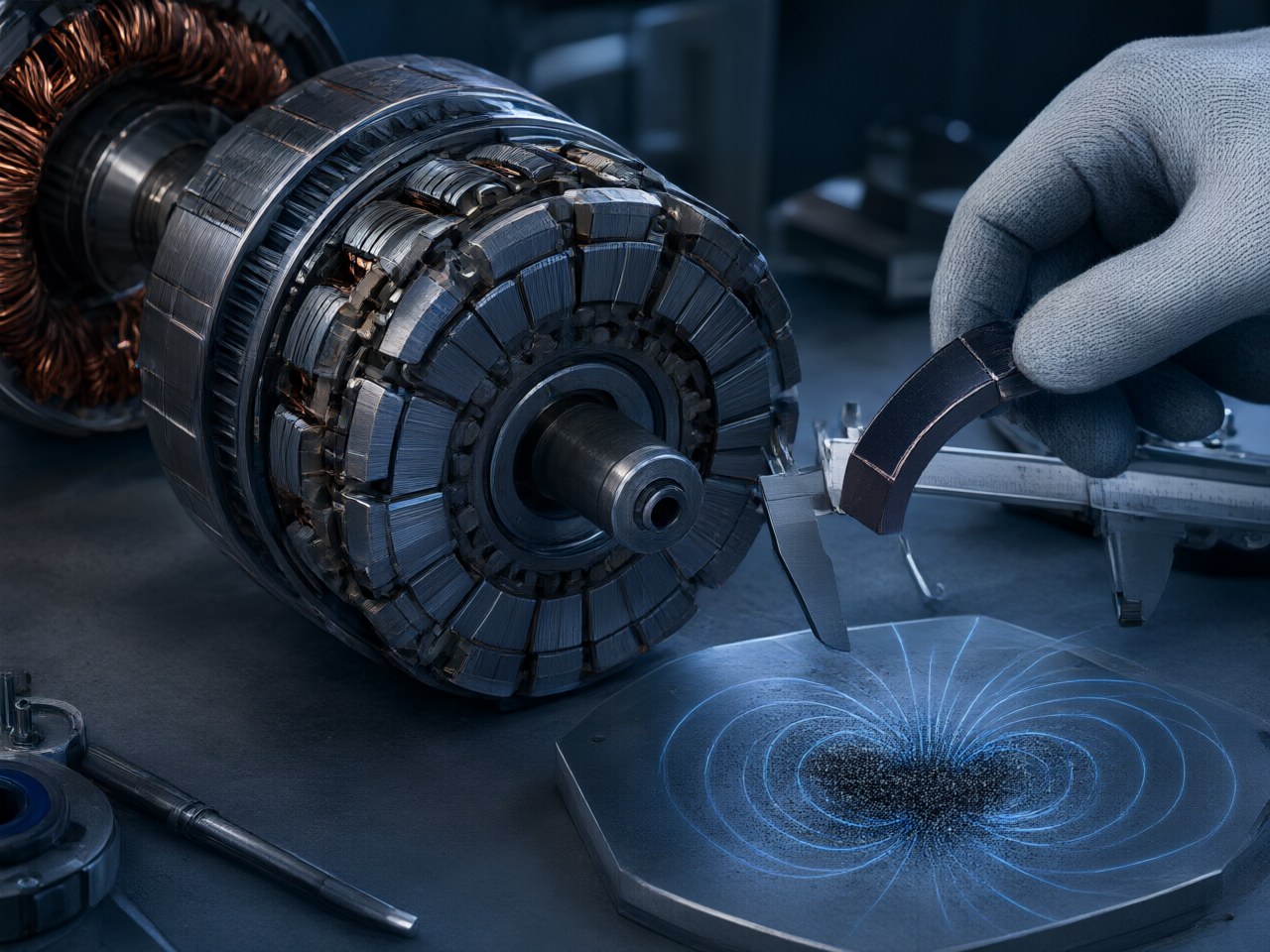
How to Balance Magnetic Energy Product, Coercivity, and Cost in High-Performance Motors
Motor designers rarely get to pick a magnet in isolation. The grade sets the remanence and the intrinsic coercivity you can work with. Geometry, leakage, and temperature then decide how much of that remanence becomes air-gap flux, how close the operating point sits to the knee, and what magnet cost the program has to defend. Push energy product up and cost often follows. Push coercivity up with bulk heavy rare earth and remanence usually drops. Hold the magnet price down and you can give away demagnetization margin. The decision is not which grade is best in a catalog. It is where, on the remanence–coercivity–cost surface, this machine still meets torque, efficiency, and durability at a cost the program can carry.
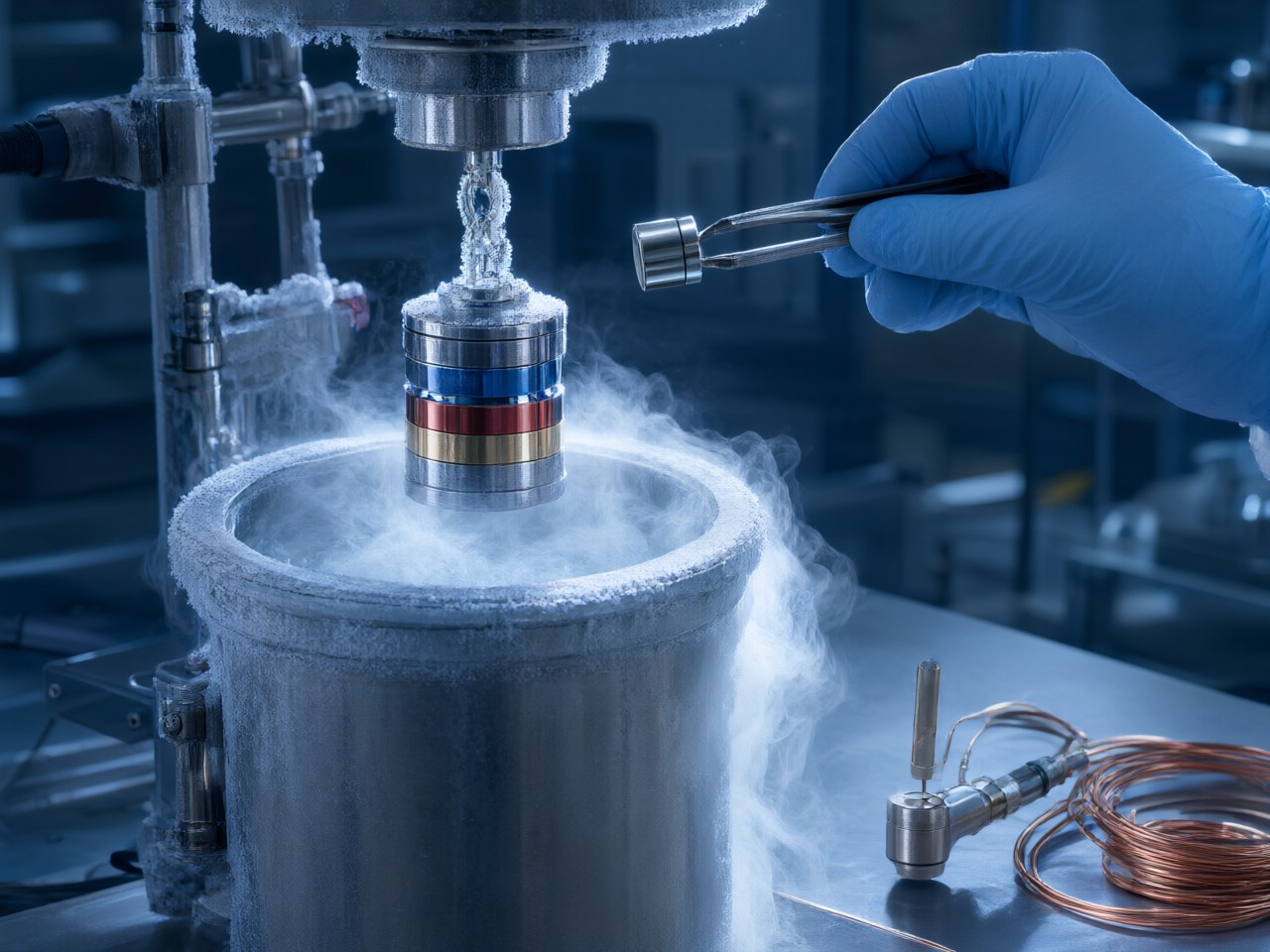
Performance of Permanent Magnet Materials in Extreme Low-Temperature Environments and Selection Recommendations
Most permanent-magnet datasheets, and the grade tables in IEC 60404-8-1, state properties at or near room temperature. Older trade specifications such as MMPA Standard No. 0100-00 do not close that gap. Designers of LNG pump drives, liquid-nitrogen-cooled motors, space mechanisms, cryogenic undulators and hardware that must share a cryostat with a superconducting magnet still need a cold operating point. The standards say how to classify a magnet and how to measure it near room temperature. They do not state how a grade behaves at 77 K or 20 K.
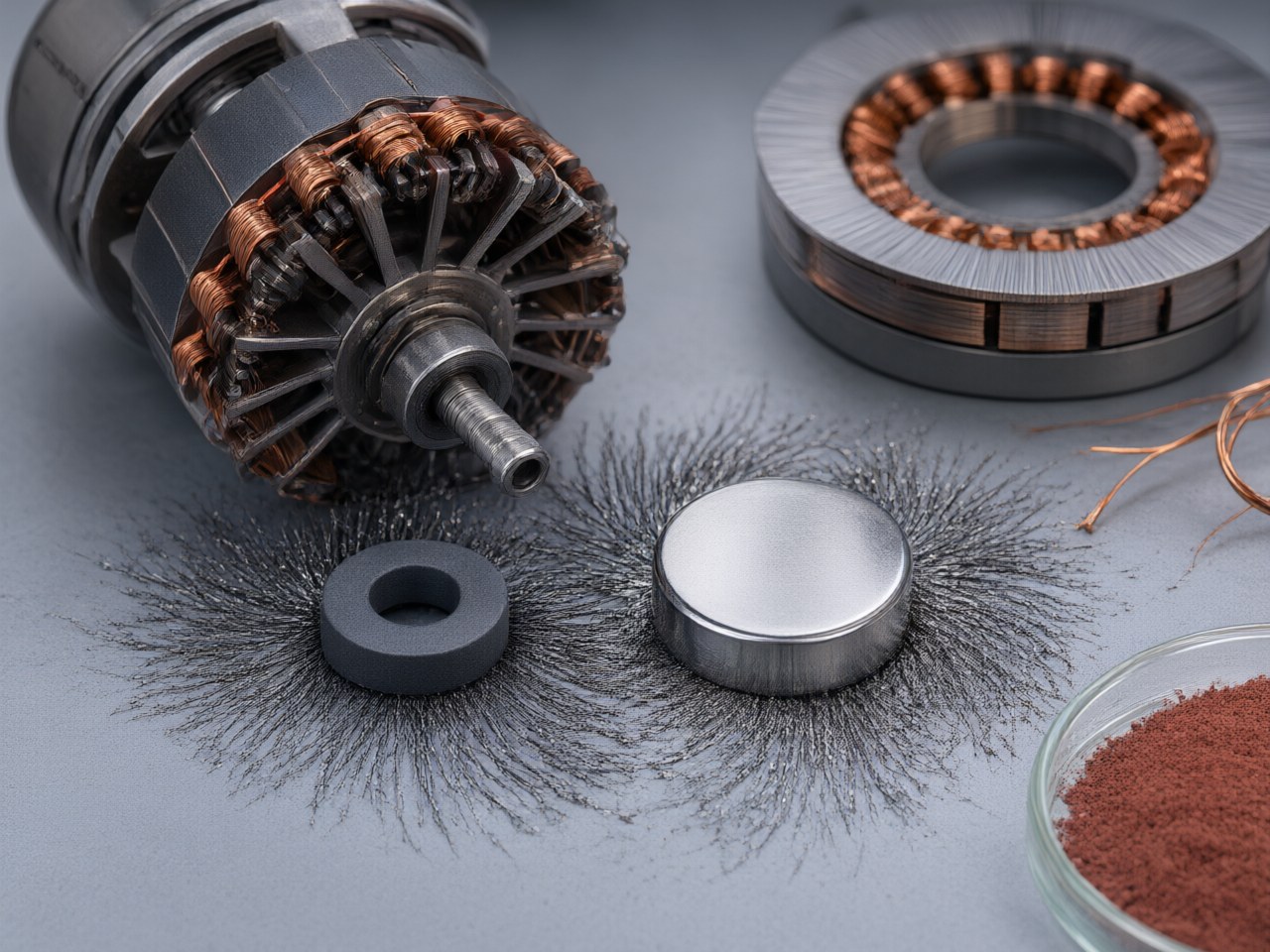
Which Emerging Applications Suit SmFeN Magnets, and How Does Their Performance Differ from NdFeB?
Design engineers are deciding whether SmFeN bonded magnets can replace or complement NdFeB in compact, shape-critical devices. SmFeN is best treated as a bonded-magnet material that competes with bonded NdFeB and, at lower flux, with ferrite. It is not a drop-in replacement for sintered NdFeB. That framing keeps the comparison on process route and application envelope rather than on the material name alone.
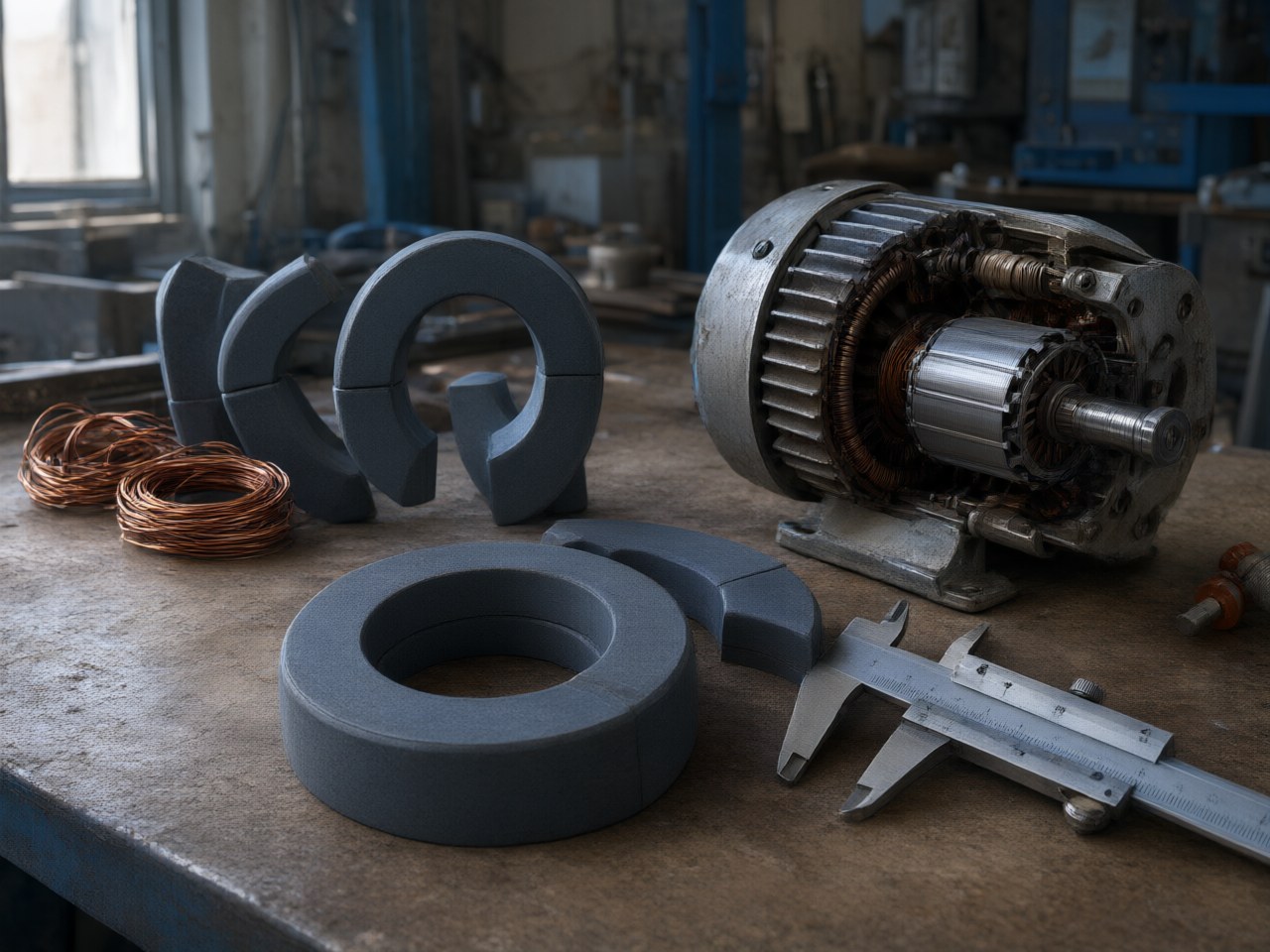
Where Are Ferrite Magnets Still Irreplaceable in Low-Cost Applications?
Rare-earth magnet prices have moved through repeated boom-and-bust cycles over the past fifteen years, yet ferrite magnets continue to ship at commodity scale — on the order of billions of pieces per year. For design engineers evaluating permanent-magnet options and procurement teams managing landed cost, the question is not whether ferrite is “good enough.” It is which application windows make ferrite the economically rational choice, and where forcing a switch to NdFeB (or, less often in this cost band, SmCo) spends budget without a meaningful gain in function.
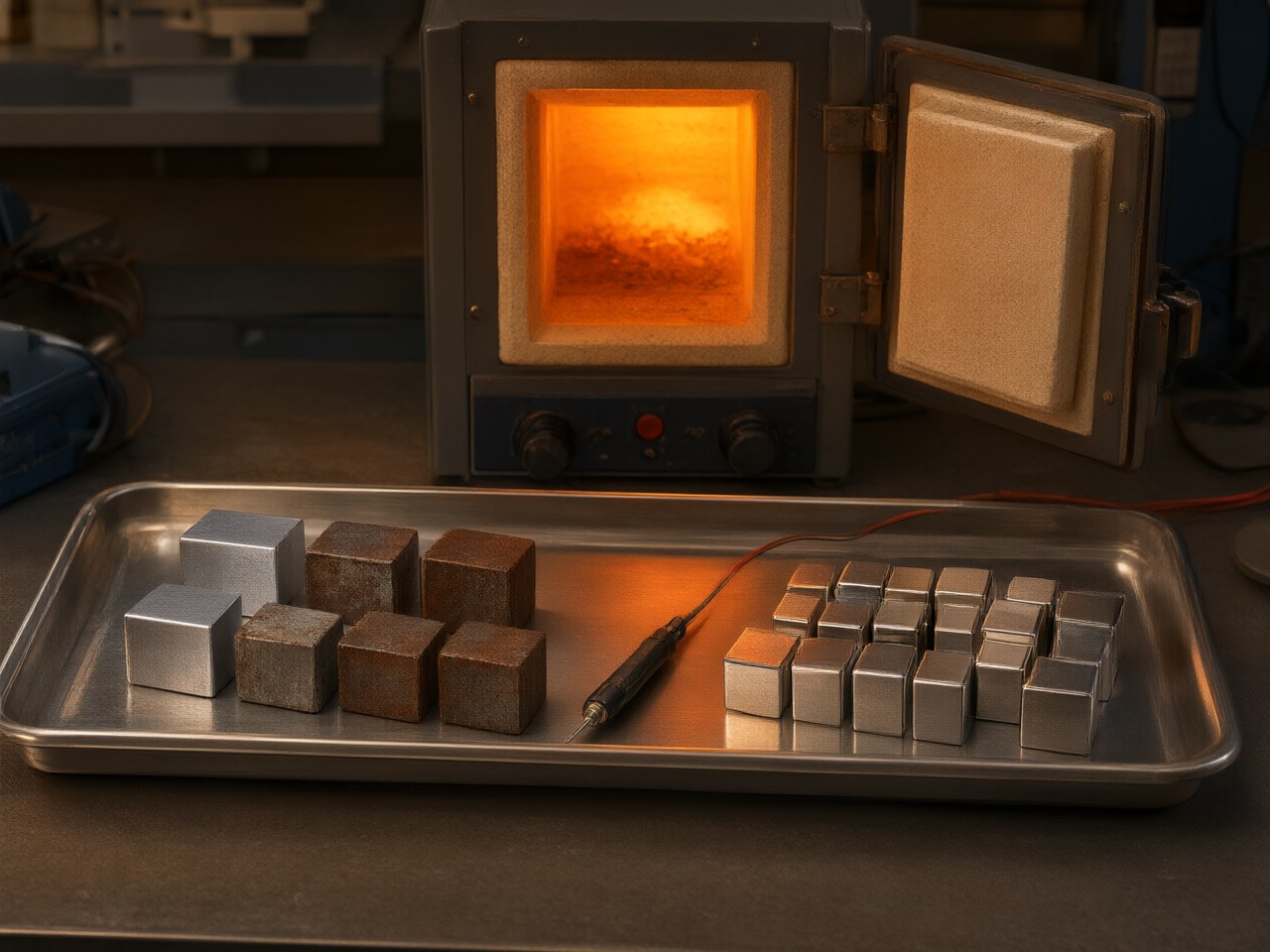
SmCo Magnets vs NdFeB Magnets: Long-Term Reliability Comparison in High-Temperature and Corrosion-Resistant Applications
Design engineers and procurement teams frequently face the critical challenge of selecting between samarium cobalt and neodymium iron boron magnets for harsh environments. While neodymium magnets offer lower initial costs, they become highly vulnerable to irreversible thermal…

How Do Heavy Rare Earth Free NdFeB Magnets Actually Perform in EV Traction Motors?
The decision facing an EV traction-motor engineer is no longer only “which magnet grade,” but which grade remains viable once rare-earth supply risk and customer compliance requirements are priced into the design. For more than a decade, dysprosium and terbium have been the usual additives that help sintered NdFeB retain coercivity at the elevated temperatures found in a traction-motor rotor. Those two elements also sit in a concentrated, geopolitically sensitive part of the supply chain, and they are the elements that a growing set of customer specifications now seeks to reduce or eliminate. The engineering question is therefore whether the coercivity and temperature-headroom penalty of a heavy-rare-earth-free (HRE-free) grade is acceptable against the compliance, cost-stability, and supply-security benefits it can buy. That is a trade-off between a measurable drop in high-temperature coercivity margin and a reduction in heavy-rare-earth exposure that cannot be read off a BH curve.
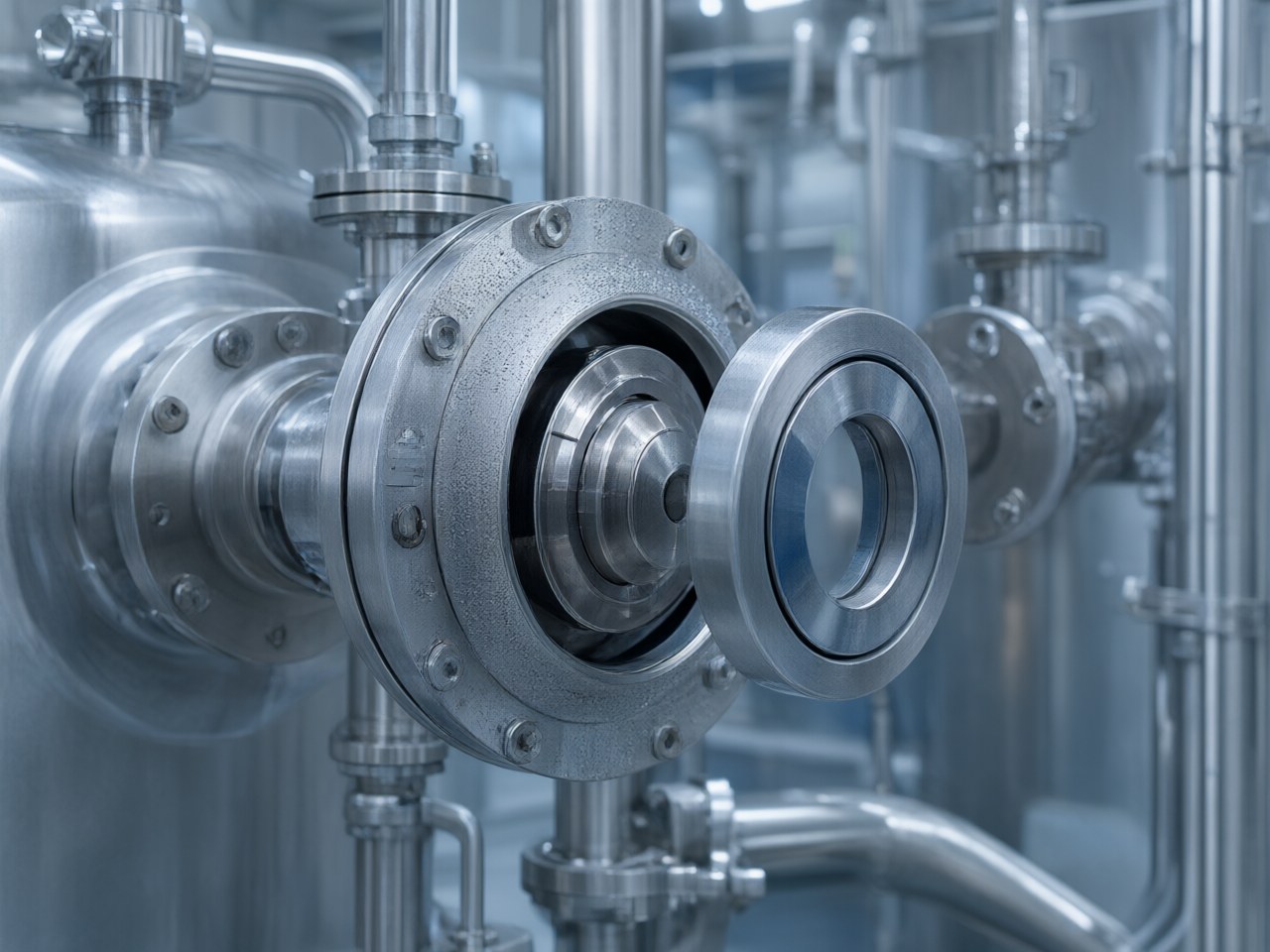
Why Do Medical, Food, and Chemical Industries Prefer Non-Contact Magnetic Drives?
Across industries where contamination is unacceptable, leakage is dangerous, and downtime is expensive, mechanical seals are no longer the automatic choice for transmitting torque through a pressure boundary. Non-contact magnetic drives are displacing them in a growing share of pharmaceutical, food, and chemical rotating equipment. The shift is being driven by tighter hygiene expectations, the cost of seal maintenance, and a simpler containment argument: if the shaft does not pierce the vessel, a dynamic seal is no longer the weakest point in the pressure boundary. This article sets out the engineering reasons for that preference and a practical framework for engineers and procurement teams evaluating magnetic-drive adoption.
Magnetic Sensing and Magnetic Transmission Solutions in Industrial Automation Equipment: From Encoders to Couplings
On an industrial automation line, position feedback and torque transmission are parallel chains. Magnetic encoders serve the first chain: they convert rotary or linear motion into a readable electrical signal. Magnetic couplings serve the second: they transfer torque across a static barrier with no mechanical contact. Both rest on the same physical platform—the spatial arrangement of permanent magnets and a soft-magnetic return path—but their optimization logic is not the same.
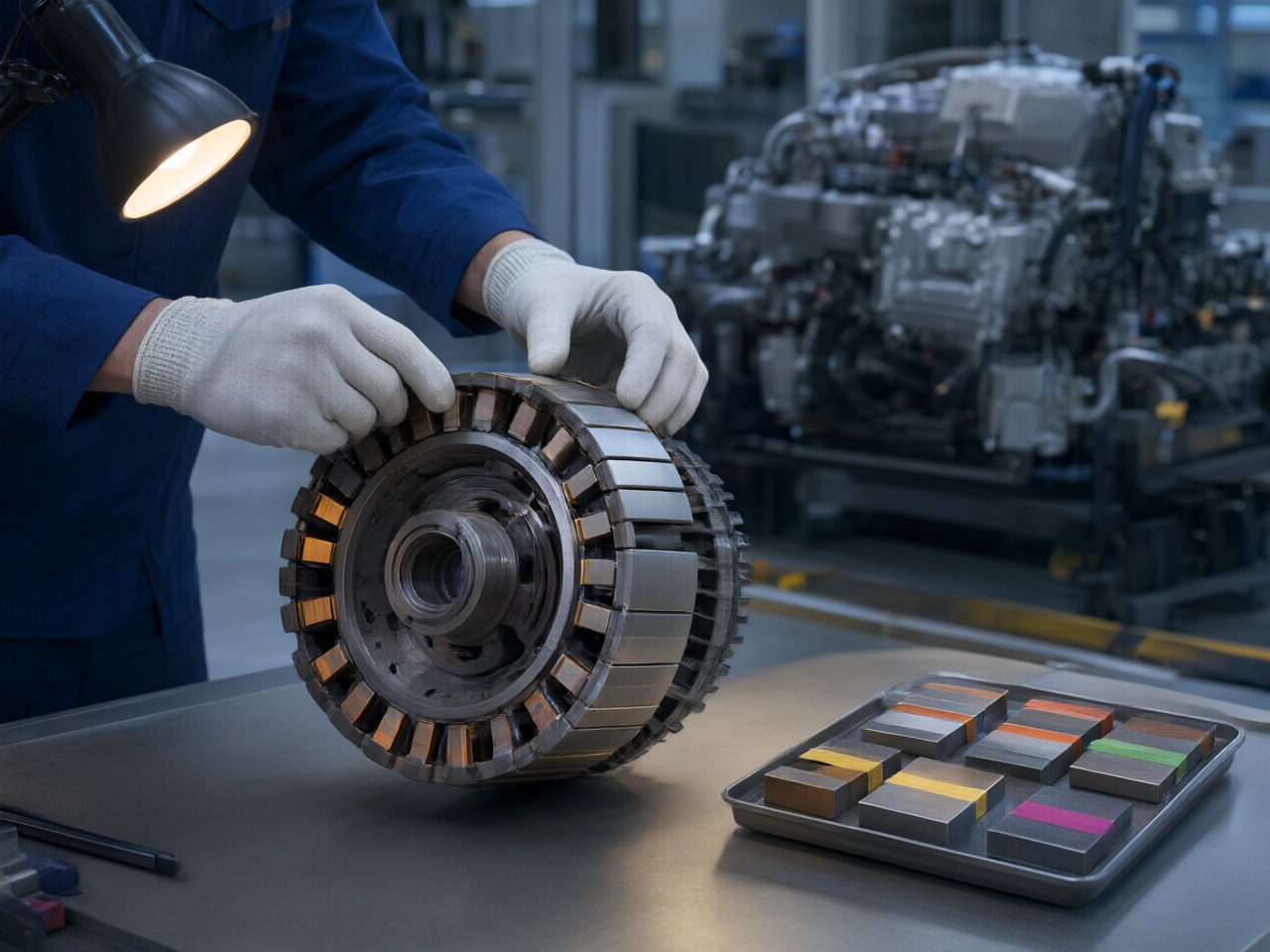
What Magnetic Materials Are Commonly Used in New Energy Vehicle Motors? A Complete Analysis of Drive Motor Magnet Applications
The electric vehicle powertrain is converging on a handful of magnetic material families, yet the selection landscape is shifting faster than most design teams realize. Rare-earth supply volatility, rising power-density targets, and cost-down pressure from OEMs are reshaping which materials win in production programs versus which merely look good on a datasheet. This article maps the current state and near-term trajectory so that design engineers and sourcing teams can make informed, defensible decisions for the next platform cycle.