
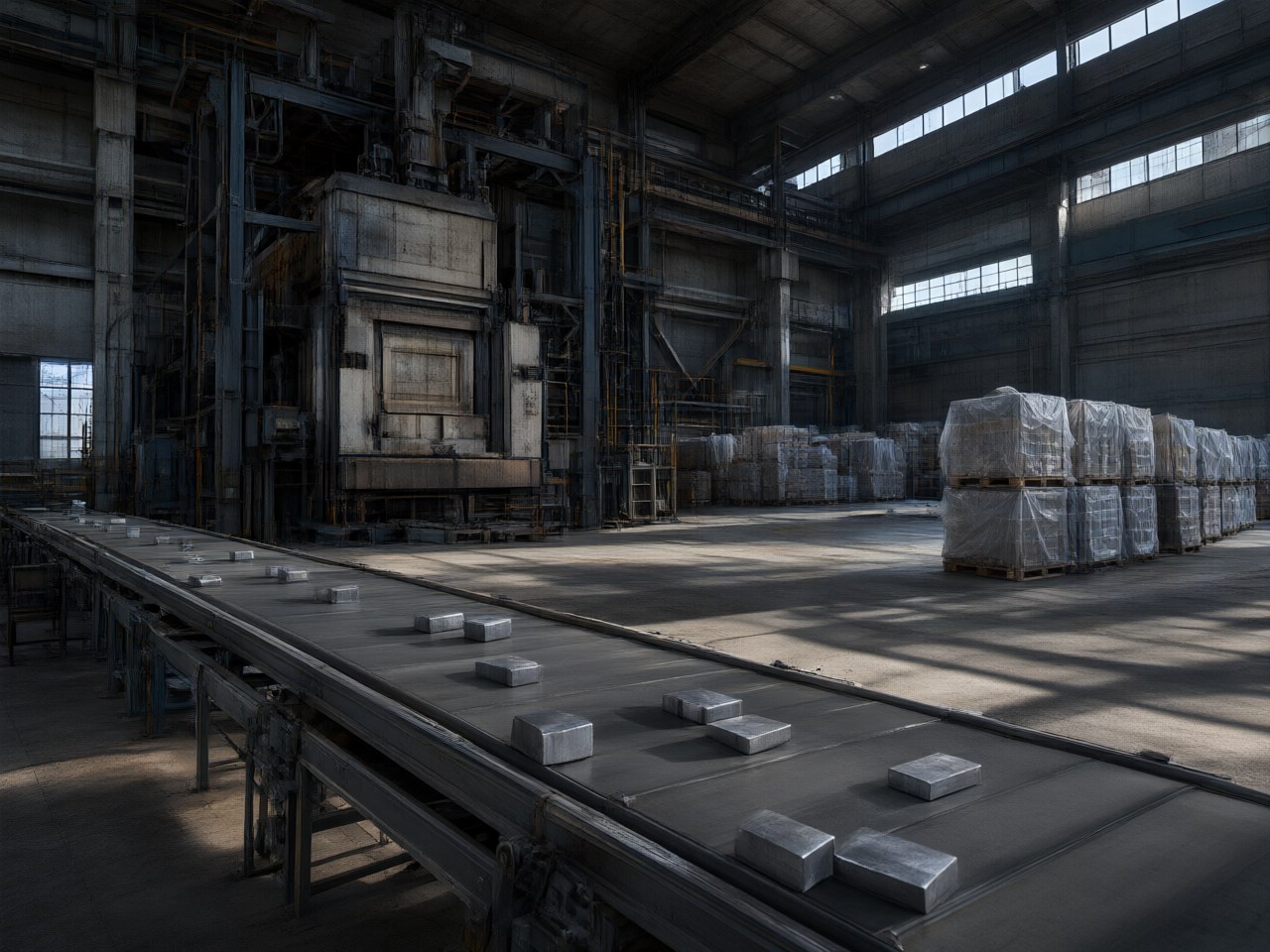
General Motors has canceled a 10-year supply agreement with the US subsidiary of German magnet maker VAC Group, an order that accounted for 90% of capacity at the Sumter, South Carolina, magnet plant, leaving the roughly $500 million strategic facility without its main…
Republished by AIC Engineering. All rights belong to the original publisher; see Source below.
General Motors has canceled a 10-year supply agreement with the US subsidiary of German magnet maker VAC Group, an order that accounted for 90% of capacity at the Sumter, South Carolina, magnet plant, leaving the roughly USD 500 million strategic facility without its main customer. The move stems from the Trump administration's elimination of federal EV subsidies; in January, GM booked USD 6 billion in charges to unwind EV investments and cut production. Energy Fuels, which had planned to acquire VAC for USD 1.9 billion, said the purchase price may be adjusted. Industry players say the real bottleneck for the US rare earth sector is talent in separation and magnet manufacturing, compounded by costs about 30% higher than in China and end-product price gaps of up to 80%. With the White House's 2027 defense procurement ban approaching, the Taiwanese-supplier-free domestic supply chain still faces severe tests.
Key Elements
The flagship project in the United States' effort to build a domestic rare earth supply chain has suffered a major setback. General Motors has canceled a 10-year long-term supply agreement with the US subsidiary of German magnet maker VAC Group (Vacuumschmelze). The order had accounted for 90% of capacity at the magnet plant in Sumter, South Carolina, and the loss of its biggest customer has suddenly left the strategic facility, which Washington had high hopes for, without its main outlet.
The permanent magnet plant in Sumter represents an investment of about USD 500 million and has annual capacity of nearly 2,000 metric tons. GM and VAC announced the joint plant in 2021 and formally signed the long-term contract in 2023, with the production line's scale tailored almost entirely to GM's 10-year demand. According to Reuters, US critical minerals company Energy Fuels had planned to acquire VAC Group for USD 1.9 billion, a deal that would have made it one of the world's largest non-Chinese magnet producers. With its main customer now gone, the company said the purchase price may be subject to "potential adjustment."
Last November, US Treasury Secretary Scott Bessent personally visited the plant, held up a neodymium-iron-boron magnet for the cameras and declared: "This is the first magnet made in America in 25 years — we are ending China's chokehold on our supply chain." A year later, the biggest buyer of that magnet has chosen to walk away, a stark contrast.
GM's retreat is inseparable from a shift in the policy environment. The magnets, booked for a decade of output, were intended for GM's electric vehicle motors. But after the Trump administration took office in 2025 and scrapped federal EV purchase subsidies and tax incentives, GM's long-loss-making EV business lost its policy support, making production cuts the rational choice. In January, GM booked USD 6 billion in charges to unwind part of its EV investments, and with vehicle output expected to be revised lower, magnet demand contracted accordingly, stripping the 10-year supply agreement of its raison d'être.
The plant was never a purely commercial investment but a strategic asset fostered by the US government through subsidies and policy. From the outset it secured funding from the US Department of War and a USD 111.9 million qualifying advanced energy project tax credit; 90% of its capacity was allocated to GM, with nearly all of the remaining 10% tied to US government demand. It was precisely because official orders and subsidies provided a backstop that VAC dared to put all its eggs in one basket.
The White House has issued an executive order requiring the US defense industry and other manufacturers to stop purchasing rare earth magnets, tungsten, molybdenum, tantalum and other critical materials from China, Russia, Iran and North Korea starting January 1, 2027. With the policy deadline approaching, the largest private-sector customer has exited at this very moment, bringing the question of how to absorb US domestic magnet capacity to the fore.
Industry players generally believe the real bottleneck is not the source of ore but talent in separation and magnet manufacturing. Marina, an associate professor at the Australia-China Relations Institute at the University of Technology Sydney, noted that "it takes at least a decade of hands-on experience to train a fully qualified rare earth engineer." In the 1990s, the United States voluntarily moved production lines offshore because of the high environmental costs and low margins of rare earth smelting; now, to rebuild a domestic supply chain, talent must be cultivated from scratch.
Gavin Harper, a critical materials researcher at the University of Birmingham, analyzed that as knowledge decayed, US expertise in rare earth separation, metal manufacturing and alloy production eroded in tandem. "Not only do the operating processes in the United States need to be rebuilt, but the knowledge of the machines and equipment needed to carry out these processes also needs to be rebuilt from zero." In other words, building a magnet plant can be done with capital in a few years, but cultivating a team of engineers capable of running a production line smoothly takes at least a generation.
The cost structure is another hurdle. According to data from the Fudan Development Institute, mid-grade neodymium-iron-boron magnets cost about USD 26 per kilogram to make in China, versus about USD 34 per kilogram in the United States or the West — a gap of roughly 30%.
| Item | Made in China | Made in US/West |
|---|---|---|
| Unit cost of mid-grade NdFeB magnets | About USD 26/kg | About USD 34/kg |
| Manufacturer's customary profit margin | Under 10% | New projects need about 30% to attract investment |
| End-product price gap | Up to 80% |
Note: Unit cost data comes from the Fudan Development Institute; profit margins and the price gap are estimates from the same source.
Factor in Chinese manufacturers' low-margin, high-volume model of earning less than 10% profit, versus the 30% margin US new projects need to attract investment, and the end-product price gap can reach as much as 80%. The government can certainly sustain a small slice of capacity through defense orders and high-price guarantees, but the civilian market will not pay a premium for "country of origin" indefinitely — GM's exit is a textbook case.
For investors, the signal from this episode is clear: the US rare earth localization theme faces a dual test of orders and costs in the near term. The possible change in the price of Energy Fuels' acquisition reflects that capital markets have begun to revalue the actual worth of such policy-driven assets; the capacity utilization and future order intake of VAC's US subsidiary will be key things to watch. As for whether the US defense industrial base can find sufficient non-Chinese magnet supply once the 2027 procurement ban takes effect, that remains an open question.
From an industry perspective, US rare earth projects currently look more like defense programs backstopped by the government than a commercial supply chain capable of self-sustaining circulation. Until talent, equipment knowledge and cost structure are all in place, any order change at a single flagship plant could affect the pace of rebuilding the entire supply chain.
Source
- BigGo Finance (2026-10-30)
- Original article: GM Cancels 10-Year Contract; Orders at Flagship US Rare Earth Magnet Plant Evaporate by 90%
- https://finance.biggo.com/news/49b4ab32-7b93-4a99-9404-9d7e71cb77b3