
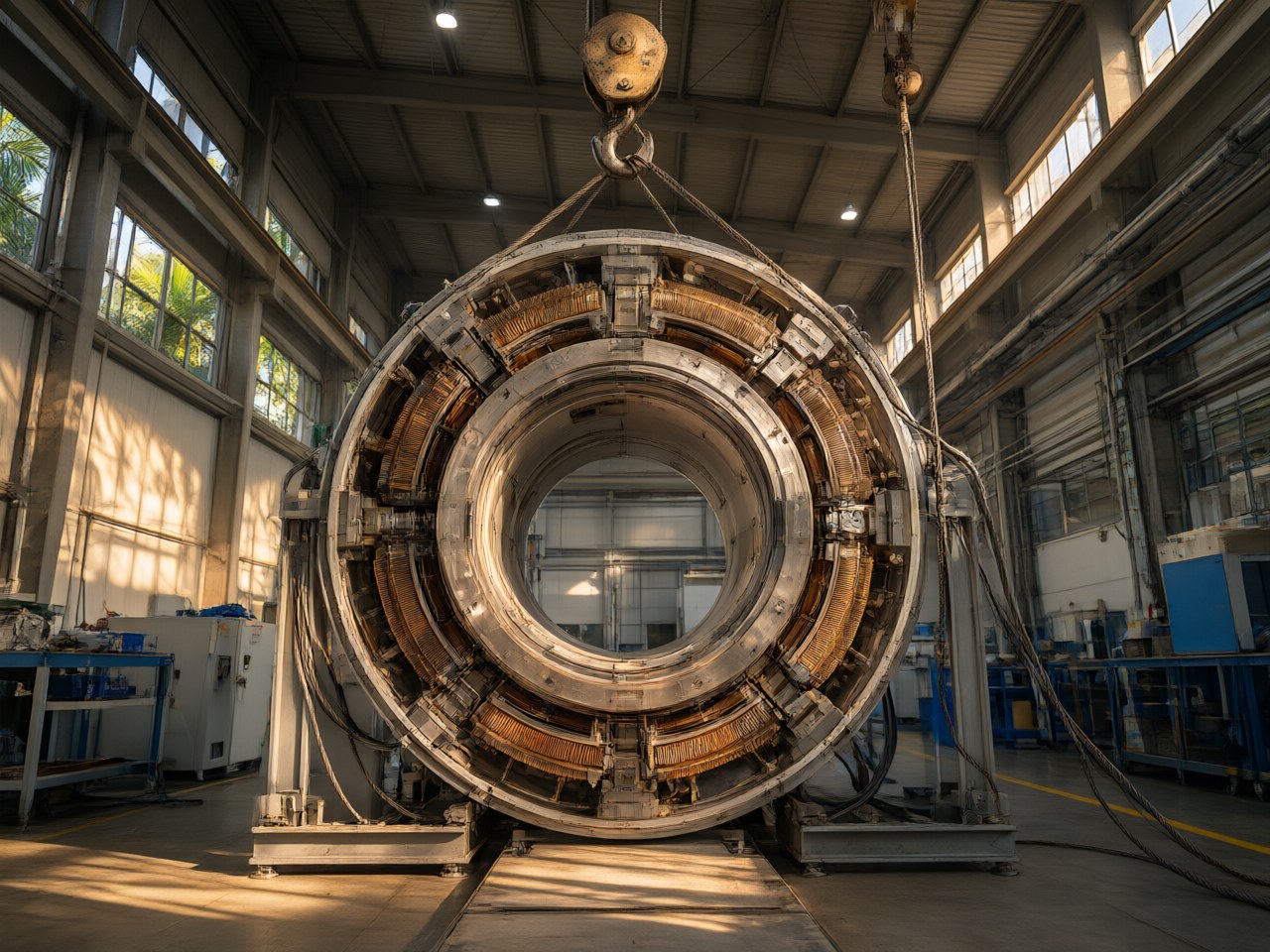
A large MRI system requires magnets, RF and gradient systems, image processing software, as well as installation, commissioning, and long-term maintenance. According to the AIC Engineering team's analysis of recent industry data, China has officially surpassed the United…
This article is reprinted from Juncai Magnetic Applications, with all rights reserved by the original author; the original link is provided in the "Sources" section at the end.
On October 27, Florianópolis, the capital of the southern state of Santa Catarina, welcomed a group of executives from Chinese medical device companies. Zhang Qiang, Chairman of United Imaging, signed a cooperation agreement with the local government, planning to invest 535 million reais to build a factory in Joinville, about 500 kilometers from São Paulo. The planned factory, covering approximately 8,000 square meters, will produce magnetic resonance imaging (MRI) and oncology radiotherapy equipment, expected to create 200 to 500 jobs, with the first phase of construction scheduled to start in the second half of 2027. Site selection took nearly a year. The United Imaging team inspected multiple cities in Santa Catarina and specifically visited ports such as Itajaí, Navegantes, and Itapoá, ultimately choosing the Perini Industrial Park in Joinville. A Chinese medical device manufacturer has begun searching for factory space and supply chains to produce high-end medical equipment in Brazil.
Behind this investment is a newly released set of data. On September 22, the Brazilian Alliance for Innovative Medical Industry (ABIIS) released its industry report for the first half of 2026. According to the report, Brazil imported USD 696.5 million worth of medical devices from China, accounting for 21% of total imports, surpassing the United States at 20% and Germany at 12%.
China has become Brazil's largest source of medical device imports. In 2025, the United States still ranked first with a 17.1% share, Germany was at 14.9%, and China was third with only 12.4%. In the first half of 2026, China's import share jumped to the top.
However, the growth of Chinese medical equipment in Brazil has extended from disposable consumables and basic hospital equipment to imaging diagnostics, life monitoring, and high-end medical equipment.
1. Brazilian Hospitals Are Buying More Chinese Equipment
What happened in the Brazilian medical market? According to ABIIS data, in the first half of 2026, Brazil's total medical device imports reached USD 3.355 billion, a year-on-year increase of 8.2%; exports were USD 456 million, a year-on-year decrease of 5.9%. The half-year trade deficit reached approximately USD 2.9 billion. Meanwhile, the apparent consumption of medical devices in Brazil grew by 7.5%.
The demand comes from increasing medical activities. In the first half of 2026, the Unified Health System (SUS) completed approximately 3.28 million surgeries, a year-on-year increase of 4.5%; outpatient diagnostic examinations reached about 2.62 billion, an increase of 3.7%. Among them, MRI diagnostic examinations increased by 16.7%.
The medical service network is also expanding. As of the end of June, SUS had 103,193 medical service institutions, an increase of 1,959 from the end of 2025; non-SUS medical service institutions reached 375,899, an increase of 17,251 in half a year. More examinations, surgeries, and clinics mean hospitals need to continuously purchase equipment, reagents, and medical consumables.
Brazil has a population of over 200 million, with a public healthcare system covering the entire country, and a quite developed private hospital and medical insurance market. The two types of medical systems form a richly layered equipment demand. Large private hospitals have continuous procurement needs for high-end imaging, life monitoring, and diagnostic technologies. The public healthcare system needs to expand examination and treatment capabilities within limited budgets.
This creates opportunities for manufacturers that can provide products across multiple price ranges. The growth of Chinese medical equipment first occurred within this round of demand expansion. According to statistics from the China Chamber of Commerce for Import and Export of Medicines and Health Products, in the first half of 2026, China's medical device exports to Brazil reached approximately USD 700 million, a year-on-year increase of 28.9%, showing prominent growth among major export markets. Categories driving the growth include disposable medical consumables, massage and rehabilitation equipment, and dental consumables.
The growth in China's exports to Brazil includes a large number of products with obvious manufacturing scale advantages. Injection, infusion, nursing, and basic diagnostic supplies used in hospitals still constitute an important part of China's international trade in medical devices. But another batch of products is gradually entering higher-value procurement lists in Brazilian hospitals.
2. China Has Entered Hospital Imaging and Monitoring Systems
ABIIS's detailed import data for the first quarter of this year provides a clearer industrial structure. In the field of medical imaging equipment and related consumables, China is Brazil's largest source of imports, with an import value of approximately USD 70 million, accounting for 39.6% of this category. In the field of hospital life support and monitoring equipment, China accounts for 29.1%. For laboratory separation, transport, and mixing equipment, China accounts for 39.3%. For medical protective equipment and hospital furniture, China's import shares reach 66.8% and 68.6%, respectively.
These types of products span different technical fields. Medical furniture and protective equipment mainly reflect manufacturing scale, cost, and supply chain efficiency. Life support and monitoring equipment involve capabilities in sensors, signal processing, equipment reliability, clinical operation, and compatibility with hospital information systems. Medical imaging equipment places more complex demands on manufacturers. A large MRI system requires magnets, RF and gradient systems, image processing software, as well as installation, commissioning, and long-term maintenance. Imaging diagnostic equipment also needs to continuously adapt to clinical needs, helping hospitals shorten examination times and improve diagnostic efficiency.
Chinese manufacturers are already able to provide products covering multiple technical levels. However, there are still differences in the areas of advantage between Chinese and American companies in Brazil. In the first quarter of this year, the United States accounted for 30.2% of in vitro diagnostic (IVD) reagent imports and 28.5% of IVD equipment and analytical instruments. Cardiovascular, orthopedic, ophthalmic, and some high-end laboratory analytical equipment are also led by US companies as advanced import sources. These businesses involve reagent formulations, clinical applications, patents, doctors' usage habits, and long-term equipment installation bases. Especially in IVD, after hospitals purchase analyzers, they need to purchase supporting reagents for a long time. The customer relationships formed by equipment installations may last for years.
It can be seen that ranking first in medical device import value is only a phased achievement of the Chinese supply chain entering the Brazilian medical market. Behind the share growth is both the large-scale delivery of medical consumables and the technological progress in life monitoring, ultrasound, and imaging equipment. How much profit Chinese manufacturers can obtain still depends on the product structure and the services and consumables continuously purchased by hospitals.
3. Mindray and United Imaging Are Doing Two Different Businesses
The financial reports of domestic medical equipment companies can further explain these changes. In the first half of 2026, Mindray achieved an operating income of 17.747 billion RMB, of which international business revenue was 9.471 billion RMB, a year-on-year increase of about 13.7%, accounting for 53% of total revenue.
Latin America business revenue reached 1.662 billion RMB, higher than the 1.390 billion RMB in the same period last year, a year-on-year increase of about 19.5%. This set of Latin America revenue covers multiple countries, and the contribution of the single Brazilian market has not been disclosed separately. But it shows that China's leading medical equipment companies have already established businesses of scale locally. Mindray's products mainly cover life information and support, in vitro diagnostics, and medical imaging. Its 2026 semi-annual report shows that life information and support business revenue was 4.811 billion RMB, IVD business was 6.865 billion RMB, and medical imaging business was 2.836 billion RMB. International ultrasound business continued to grow, with revenue from ultra-high-end series ultrasound products increasing by more than 30% year-on-year.
Mindray's advantage comes from a relatively rich product portfolio. A hospital purchasing monitors, anesthesia machines, ultrasound equipment, or IVD products can obtain multiple categories of equipment and supporting services from the same supplier. This helps reduce the complexity of procurement coordination, equipment training, and maintenance management.
United Imaging takes another path. In the first half of 2026, United Imaging's revenue was 7.052 billion RMB, a year-on-year increase of 17.22%. Of this, overseas revenue was 1.765 billion RMB, a year-on-year increase of over 50%, and the proportion of overseas revenue increased to 25.02%. United Imaging's products are concentrated in MRI, CT, molecular imaging, radiotherapy, and other fields. These devices have high unit values, and R&D investment and technical thresholds are also higher.
In May this year, United Imaging showcased products including high-end MRI, CT, and new-generation ultrasound at the Paulista Radiology Congress (JPR) in São Paulo. The company disclosed that its products have entered medical institutions such as Hospital Israelita Albert Einstein in Brazil and established cooperation with local imaging diagnostic institutions. These customer cases mean that Chinese high-end imaging equipment is beginning to enter Brazil's mature clinical usage system.
But for medical equipment companies, selling machines is only part of the revenue. After a large imaging device is put into operation, it requires long-term maintenance, calibration, software updates, and parts replacement. When large hospitals purchase equipment, they also evaluate the supplier's maintenance response time, spare parts supply capability, and equipment availability. United Imaging's semi-annual report this year provided a set of noteworthy data. In the first half of 2026, the company's service business revenue was 980 million RMB, a year-on-year increase of 20.11%, with the gross margin maintained at over 60%. Service revenue accounted for about 13.9% of total operating revenue. This set of data belongs to United Imaging's global business, including various equipment and service items. But from the perspective of business structure, after-sales service has become a business with high profitability. As overseas equipment installations increase, maintenance, upgrades, and long-term service contracts are likely to bring more stable revenue to Chinese medical equipment companies. This is also an important reason for United Imaging to expand localized operations in Brazil.
4. The Brazilian Medical Market Has Two Procurement Logics
Brazil has one of the largest universal public healthcare systems in the world. According to data from the National Supplementary Health Agency (ANS) of Brazil, in September 2026, national private medical insurance covered approximately 53.11 million people, about 24.9% of the total population. Most Brazilian residents mainly obtain medical services through the public healthcare system SUS. However, the distribution of high-end imaging equipment and specialized medical resources shows obvious differences from the population structure.
A study published in the Brazilian Journal of Radiology in 2024, using national data from 2015 to 2021, found that private medical institutions own the majority of CT and MRI equipment, and the equipment allocation in the public healthcare system has long been below the reference targets set by the government. The atlas released by the Brazilian College of Radiology in 2025 also reflects this regional difference. In the Southeast of Brazil, there are 13.18 radiologists per 100,000 people, while in the North, there are fewer than 5. High-end medical resources are concentrated in economically developed large cities.
Brazilian hospitals therefore face two different procurement environments. One is large private hospitals and imaging diagnostic groups. They need to consider patient volume, examination efficiency, equipment utilization rate, maintenance costs, and clinical quality. Equipment procurement is often accompanied by multi-year service contracts. The other is the public healthcare system and medical service institutions supported by public funds. These institutions need to balance procurement budgets, covered populations, regional medical needs, and government-mandated procurement procedures.
More interestingly, there are business connections between the two systems. In July 2026, the Brazilian Ministry of Health expanded the imaging examination items of the "Agora Tem Especialistas" program. Private and charitable medical institutions can provide CT, MRI, ultrasound, and other examinations to SUS patients and receive financial credit offsets against federal taxes as specified by the policy. The payment standards for some examination items have been increased by more than 300% compared to the original standards. This links the equipment operations of private hospitals more closely with the examination needs of the public healthcare system.
For imaging equipment manufacturers, the procurement logic of buyers has also changed accordingly. A private diagnostic center purchasing an MRI may need to calculate how many examinations can be completed daily, and how much revenue can be obtained from public medical payments and private insurance. The price of the equipment, examination efficiency, maintenance time, and long-term service costs will all affect the return on investment. This also explains why the Brazilian high-end medical equipment market has a high customer entry threshold. Chinese companies need to prove that the equipment can meet clinical requirements and also establish a service system that conforms to the operating conditions of local hospitals. In areas with relatively insufficient medical resources, equipment investment also faces limitations such as doctors, technical personnel, supporting facilities, and capital investment. For manufacturers, the growth potential of the Brazilian medical market is very large, but different regions and different payment systems correspond to completely different sales conditions.
5. After Building a Factory, There Are Still Three Thresholds
On October 27, United Imaging announced an investment of 535 million reais in Brazil. This investment can be understood in the context of changes in Brazil's medical industry policy. In July this year, Brazil passed legislation establishing local R&D, manufacturing, and technology transfer in the medical and health industry as a long-term industrial policy. The government hopes to use the huge procurement demand of SUS to promote the domestic production of medical equipment, drugs, and other medical technologies.
One important tool is the preference for local manufacturing in government procurement. The Brazilian Ministry of Industry and Trade disclosed that in the procurement of medical equipment for designated PAC projects, eligible locally manufactured equipment can enjoy a 10% price preference margin. For products that also meet local R&D conditions, an additional 10 percentage points of preference can be obtained. This measure applies to specified products and procurement scopes. Therefore, medical equipment manufacturers need to answer a more complex investment question. If continuing to export from China, they can utilize the mature domestic industrial chain and production scale. If shifting to local manufacturing in Brazil, they need to increase fixed asset investment, hire local employees, establish supply chains, and manage production costs.
Procurement competition is also intensifying. On November 10, the Brazilian Ministry of Health disclosed that Novo PAC Saúde is expected to save 3.37 billion reais through project standardization and centralized procurement. Of this, the expected savings in equipment and vehicle procurement reach 2.07 billion reais. For medical equipment companies, this indicates larger-scale procurement opportunities, but also means the government can secure more favorable prices through centralized procurement. Localization helps companies enter the procurement system, while scale procurement may compress equipment sales profits.
Regulation constitutes the second threshold. The Brazilian Health Regulatory Agency (ANVISA) manages medical devices according to risk levels. According to RDC 751/2022, medical devices are divided into four risk levels. Class I and II adopt a notification system, while Class III and IV require product registration. High-risk product registration also involves quality systems and manufacturing enterprise compliance requirements; some medical electrical equipment needs to obtain Brazilian-recognized product conformity certification. Foreign manufacturers also need to handle relevant regulatory procedures through legally established responsible entities in Brazil. This means that even if a Chinese medical equipment company has obtained product certifications in other countries, it still needs to complete local compliance procedures to enter the Brazilian market. The more product categories, the higher the complexity of registration, technical documentation, quality management, and subsequent maintenance.
The third threshold is the long-term usage cost for hospitals. Large imaging equipment procurement involves doctors, hospital management departments, and engineering technicians. For hospitals, the examination volume, downtime, maintenance response, and service costs during equipment operation directly affect long-term returns. Large multinational medical equipment companies have operated in Brazil for many years, possessing customer relationships, equipment installation bases, and mature after-sales networks. For Chinese companies to expand market share, they need to continuously improve clinical recognition and gradually accumulate service records and customer repurchases. United Imaging's factory construction in Brazil can improve some production and service conditions. But how much revenue a factory can bring ultimately depends on equipment orders, capacity utilization, service contracts, and local operating costs. These figures remain to be gradually disclosed by the company after the factory is put into production.
6. After Ranking First in Imports, Where Do the Profits Stay?
In the first half of 2026, China accounted for 20.8% of Brazil's medical device import value, and the United States accounted for 19.9%. China has already been in the position of a major supply source in this market. However, the product structures of manufacturers from the two countries still differ. Chinese companies have strong competitiveness in medical protective equipment, basic hospital equipment, and some imaging and monitoring products. American companies have accumulated customer and technological advantages in IVD reagents, some analytical instruments, and high-end medical products.
As Chinese medical equipment enters more hospitals in Brazil, competition will further extend to the long-term usage of products. For Chinese companies like Mindray and United Imaging, the Brazilian market provides opportunities to enter high-end hospitals and the Latin American medical system. But the growth in import value, the increase in product registrations, and the construction of local factories must ultimately return to business operating results. Which hospitals the equipment is sold to, how much long-term installation is formed, how much revenue after-sales contracts contribute, and whether local manufacturing can improve investment returns—these indicators will gradually become more important than the ranking of import source countries.
The new factory planned by United Imaging in Joinville is at the starting point of this competition. Chinese manufacturing has become an important supply force for medical equipment in Brazil. The next stage of competition will depend more on the profits created by clinical customers, government procurement, and long-term services.
Sources
- m.sohu.com › web (2026-11-11)
- Original link: Surpassing the US, China Becomes Brazil's Largest Source of Medical Device Imports
- https://m.sohu.com/a/1100236096_116132?scm=10001.325_13-325_13.0.0-0-0-0-0.5_1334